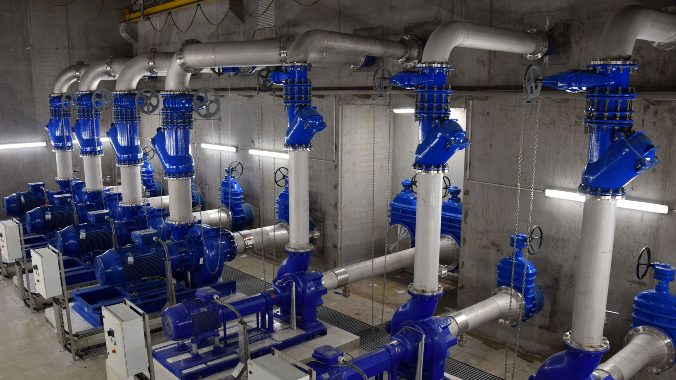
Pumping stations are facilities for transferring fluids from one location to another, using pumping systems. They are used in differenttypes of infrastructure systems, such as water supply canals, drainages and low-lying terrains. The use of these systems is for the purpose of solving the problem of decentralized sewerage systems located in hilly terrain, areas with high groundwater levels and sewage, located at great depth.
Clean water pumping stations
The treated wastewater, rainwater, drainage or groundwater flow into a collection tank / collector. Then using a pump or hydrophоric system, the water can be used for technological purposes – fire extinguishing, lawn watering and alike.
These types of systems are automatically controlled.
Sewage/Duct pumping stations
Pump stations of this type are designed for the removal of wastewater and drainage water – from residential, commercial and industrial buildings and their distribution to a subsequent treatment plant facility. The pumps are automatically controlled. The advantages of the system are reduced costs and the possibility of constant expansion.
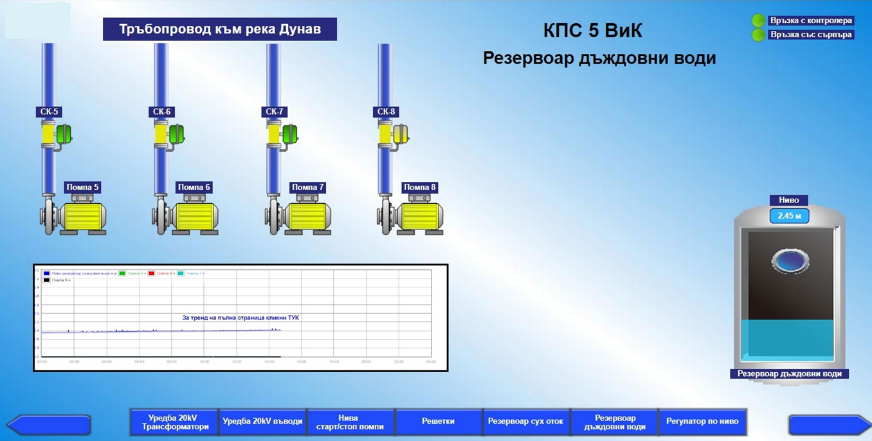
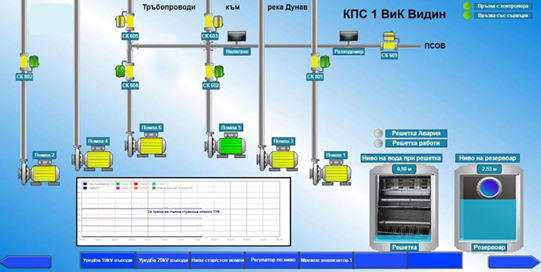
FREA ENGINEERING, Ltd. offers development, migration, integration and maintenance of cloud-based SCADA systems for monitoring the status of the pumping stations.
Снимки пречиствателна станция ВиК гр. Видин
Bioremediation – is a process used to treat contaminated media, including water, soil and soil material, by altering environmental conditions to stimulate the growth of microorganisms, to break down and degrade the target contaminants. In many cases, bioremediation is cheaper and more sustainable than other remediation alternatives. Biological remediation is a similar approach, used to treat waste, including sewage, industrial waste and solid waste. Most bioremediation processes involve oxidation-reduction reactions in which either an electron acceptor (usually oxygen) is added to stimulate the oxidation of a reduced pollutant (e.g. hydrocarbons) or an electron donor (usually an organic substrate) is added to reduce oxidized pollutants (nitrate perchlorate, oxidized metals, chlorinated solvents, explosives and fuels). In both approaches, additional nutrients can be added,vitamins, minerals and pH buffers to optimize the conditions for microorganisms. In some cases, specialized microbial cultures (bioaugmentation) are added to further improve biodegradation.